Have you ever seen someone described as impulsive in a text message, social media comment, or online discussion and wondered what it actually means?
As digital communication continues to evolve, understanding common personality-related terms has become increasingly important for navigating conversations online and offline.
People use it to describe sudden decisions, spontaneous actions, and behaviors that happen without much planning.
Updated for 2026, this guide explains the meaning of impulsive in simple language, how it’s used in texting and online conversations, examples of real-world usage, common misunderstandings, and related slang terms.
What Does Impulsive Mean?
Impulsive meaning: Acting quickly without thinking carefully about the consequences beforehand.
An impulsive person tends to make decisions based on immediate feelings, emotions, or desires rather than careful planning or consideration.
Simple Definition
When someone is impulsive, they:
- Act on the spur of the moment
- Make quick decisions
- Follow immediate emotions
- Often don’t spend much time planning
- May do things unexpectedly
Origin of the Word
The word impulsive comes from the concept of an “impulse,” which refers to a sudden urge or desire to do something. Over time, the term evolved to describe people who frequently act on these sudden urges.
Today, the word is commonly used in:
- Text messages
- Social media posts
- Online forums
- Relationship discussions
- Personality assessments
- Everyday conversations
Example
Friend 1: “I just booked a weekend trip to another city.”
Friend 2: “Wow, that’s so impulsive!”
In this example, Friend 2 means the trip was booked suddenly without much planning.
How to Use Impulsive in Texts or Chat
The word impulsive is often used when discussing actions, decisions, purchases, relationships, or unexpected behavior.
Common Situations
1. Shopping Decisions
People often use impulsive when talking about unplanned purchases.
Example:
“I saw the shoes online and made an impulsive purchase.”
Meaning: The person bought the shoes suddenly without much thought.
2. Travel Plans
Example:
“We took an impulsive road trip last weekend.”
Meaning: The trip wasn’t carefully planned beforehand.
3. Relationship Decisions
Example:
“Sending that text at midnight was pretty impulsive.”
Meaning: The message was sent without fully thinking through the consequences.
4. Social Media Posts
Example:
“Deleting my account was an impulsive decision.”
Meaning: The action happened quickly and emotionally.
Examples of Impulsive in Conversations
Seeing the word used in context makes it easier to understand.
Example 1: Online Shopping
Sarah: “I bought a new gaming chair.”
Jake: “Didn’t you just buy one last year?”
Sarah: “Yeah, it was an impulsive purchase.”
Example 2: Text Message
Alex: “I dyed my hair blue.”
Chris: “That was impulsive!”
Example 3: Social Media Comment
Post:
“Booked a flight at 2 AM because I wanted an adventure.”
Comment:
“That’s the most impulsive thing I’ve read today.”
Example 4: Funny Conversation
Friend: “I adopted a puppy after seeing one cute photo.”
You: “That’s either impulsive or destiny.”
Example 5: Gaming Chat
Player 1: “I attacked the boss with almost no health.”
Player 2: “Very impulsive move.”
Different Types of Impulsive Behavior
Not all impulsive actions are negative.
Positive Impulsive Actions
Sometimes impulsive decisions lead to great experiences.
Examples:
- Trying a new hobby
- Taking a spontaneous trip
- Making a new friend
- Saying yes to an opportunity
- Starting a creative project
Negative Impulsive Actions
Other times, acting too quickly can create problems.
Examples:
- Overspending money
- Sending angry texts
- Quitting a job suddenly
- Making risky decisions
- Posting something regrettable online
The key difference is whether the action helps or harms the person in the long run.
Why Do People Call Someone Impulsive?
When someone describes another person as impulsive, they’re usually referring to patterns of behavior rather than a single action.
Characteristics often associated with impulsive people include:
- Spontaneity
- Quick decision-making
- Emotional reactions
- Adventurous behavior
- Risk-taking tendencies
For example:
“My brother is impulsive. Last month he bought concert tickets, and this month he’s learning to skydive.”
This suggests a consistent habit of acting quickly and embracing new experiences.
Common Mistakes or Misunderstandings
Many people misunderstand what impulsive actually means.
Mistake #1: Thinking Impulsive Means Stupid
Being impulsive does not automatically mean someone lacks intelligence.
A very smart person can still make spontaneous decisions.
Mistake #2: Assuming It’s Always Negative
Impulsiveness can sometimes lead to exciting opportunities and memorable experiences.
Many successful entrepreneurs, artists, and travelers describe themselves as somewhat impulsive.
Mistake #3: Confusing Impulsive with Reckless
These words are similar but different.
Impulsive
- Acting quickly
- May not fully think things through
- Not necessarily dangerous
Reckless
- Ignoring obvious risks
- Careless about consequences
- Often dangerous
Mistake #4: Believing Everyone Uses It as an Insult
In many conversations, impulsive is used neutrally or even positively.
Example:
“I love how impulsive she is. She’s always up for adventures.”
Impulsive Meaning on Social Media
The word appears frequently across social platforms.
TikTok
Users often describe spontaneous trends, purchases, or challenges as impulsive.
Example:
“This impulsive haircut actually turned out amazing.”
Common captions include:
- “An impulsive weekend getaway.”
- “Another impulsive shopping trip.”
- “My impulsive side won again.”
X (Twitter)
People often use impulsive when discussing:
- Sudden opinions
- Quick reactions
- Emotional decisions
- Trending topics
Reddit and Forums
Users frequently discuss impulsive spending, impulsive relationships, and impulsive life choices.
How to Respond When Someone Calls You Impulsive
The best response depends on the context.
If You Agree
You could reply:
- “That’s probably true.”
- “I definitely act on instinct.”
- “I like being spontaneous.”
If You Disagree
You might say:
- “Actually, I thought about it a lot.”
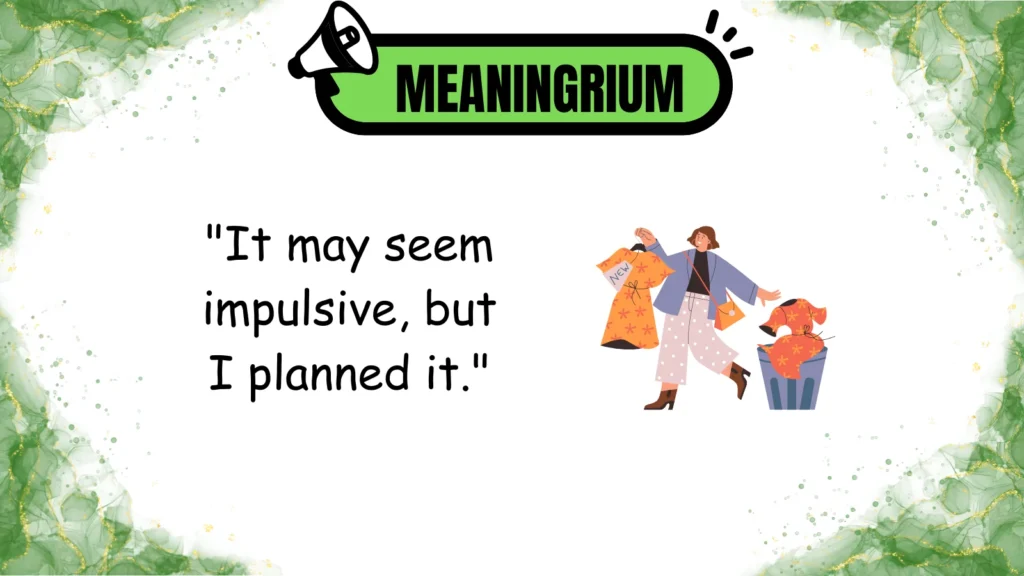
- “It may seem impulsive, but I planned it.”
- “There was more strategy behind it than you think.”
Related Slangs, Terms, and Abbreviations
If you’re learning modern texting language, these related words may also help.
Spontaneous
Doing something without planning.
Example:
“We took a spontaneous trip.”
YOLO
Meaning: “You Only Live Once.”
Example:
“I booked the tickets. YOLO.”
FOMO
Meaning: “Fear Of Missing Out.”
Sometimes impulsive actions happen because of FOMO.
Example:
“I bought the concert ticket because of FOMO.”
Send It
Popular internet slang encouraging someone to go ahead with a bold action.
Example:
“Just send it!”
On a Whim
Doing something suddenly and unexpectedly.
Example:
“I bought it on a whim.”
Spur of the Moment
A phrase similar to impulsive behavior.
Example:
“It was a spur-of-the-moment decision.”
When Is Being Impulsive Good?
Contrary to popular belief, impulsiveness isn’t always bad.
Benefits may include:
- More exciting experiences
- Greater adaptability
- Increased creativity
- Faster decision-making
- Willingness to try new things
Many memorable life moments begin with spontaneous decisions.
Examples include:
- Meeting new people
- Discovering hobbies
- Traveling unexpectedly
- Exploring new opportunities
When Is Being Impulsive Bad?
Problems can occur when impulsive decisions involve:
- Money
- Relationships
- Career choices
- Personal safety
- Long-term commitments
Examples:
- Buying expensive items without budgeting
- Sending emotional messages
- Making major life decisions too quickly
- Taking unnecessary risks
A balance between spontaneity and planning is often ideal.
Real-Life Relatable Scenario
Imagine you’re scrolling through social media late at night.
You see an advertisement for a weekend getaway package.
Five minutes later, you’ve booked the trip.
The next morning, you think:
“That was an impulsive decision.”
This is exactly how the word is commonly used in everyday life.
Frequently Asked Questions
1. What is the simple meaning of impulsive?
Impulsive means acting quickly without spending much time thinking about the consequences.
2. Is impulsive a positive or negative word?
It can be either positive or negative depending on the situation.
3. What does impulsive mean in texting?
In texting, it usually describes a sudden action or decision made without much planning.
4. Is impulsive the same as spontaneous?
They are similar, but spontaneous often has a more positive tone.
5. Can impulsive behavior be good?
Yes. It can lead to new experiences, creativity, and exciting opportunities.
6. What is an example of an impulsive decision?
Buying an expensive item immediately after seeing it online without researching it first.
7. Why do people act impulsively?
Common reasons include emotions, excitement, curiosity, stress, or a desire for immediate rewards.
8. Is impulsive the same as reckless?
No. Impulsive means acting quickly, while reckless involves ignoring obvious risks and consequences.
Conclusion
Understanding impulsive meaning is useful because the word appears frequently in texts, social media conversations, online communities, and everyday discussions.
In simple terms, being impulsive means acting quickly based on immediate feelings or desires rather than careful planning.
The context usually determines whether being impulsive is viewed positively or negatively.