Understanding modern communication isn’t just about knowing slang and abbreviations.
Sometimes, common words like “apologies” can carry different meanings depending on the context.
As a result, words like “apologies” have become common in both formal and informal conversations.
This guide explains everything you need to know about the term, including its meaning, origin, usage examples, common mistakes, and related expressions.
Updated for 2026, this article reflects how people currently use the word across texting, social media platforms, online communities, and professional communication.
What Does “Apologies” Mean? (Definition & Origin)
The word apologies is the plural form of apology, which means expressing regret, remorse, or sorrow for a mistake, misunderstanding, inconvenience, or wrongdoing.
However, in modern communication, especially in texts and emails, people often use “apologies” as a standalone expression instead of saying:
- “I apologize.”
- “I’m sorry.”
- “Please accept my apology.”
Simple Definition
Apologies meaning: A polite way of expressing regret or saying sorry for something.
Origin of the Word
The term comes from the Greek word apologia, which originally referred to a speech made in defense of one’s actions. Over time, its meaning shifted toward expressing regret and acknowledging mistakes.
Today, “apologies” is commonly used in:
- Text messages
- Emails
- Workplace communication
- Social media posts
- Online forums
- Customer service responses
Modern Usage
Many people now use “apologies” as a quick and professional alternative to saying “sorry.”
For example:
Apologies for the late reply.
This simply means:
Sorry for replying late.
How to Use “Apologies” in Texts or Chat
The way people use “apologies” depends on the situation and tone of the conversation.
Casual Texting
Friends may use it jokingly or casually.
Examples:
- “Apologies, I totally forgot your birthday!”
- “Apologies for ghosting you all week.”
- “My apologies, I fell asleep.”
Professional Communication
In workplaces, “apologies” sounds more formal and respectful.
Examples:
- “Apologies for the delay in responding.”
- “Please accept my apologies for the inconvenience.”
- “Apologies for the confusion regarding the schedule.”
Social Media Usage
Users often post apologies publicly when correcting information or addressing mistakes.
Examples:
- “Apologies for the typo in the previous post.”
- “Apologies to everyone who experienced issues with the livestream.”
Gaming and Online Communities
Gamers frequently use it after mistakes during matches.
Examples:
- “Apologies, my internet disconnected.”
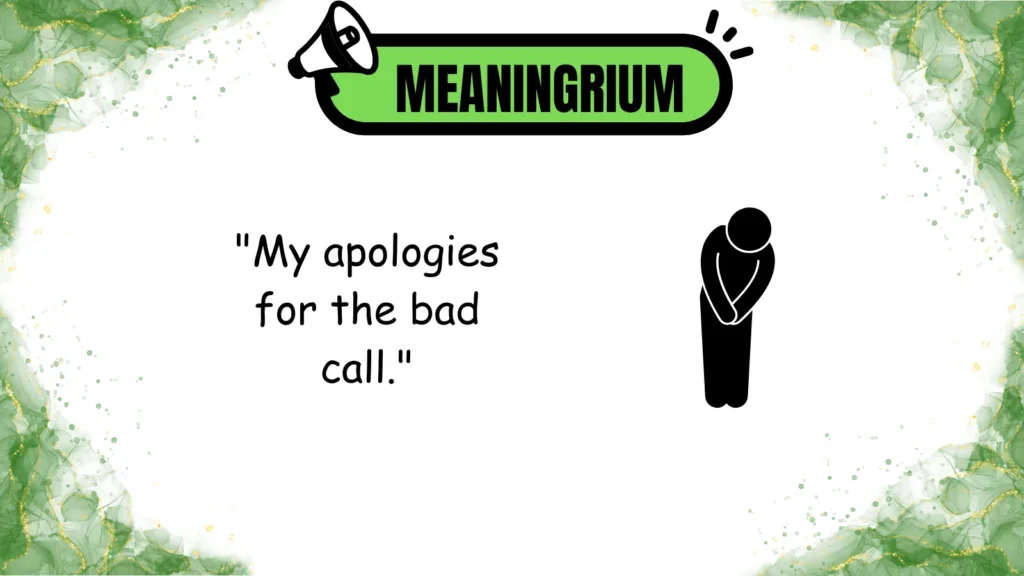
- “My apologies for the bad call.”
Different Ways People Use “Apologies”
Understanding context is important because the word can serve several purposes.
1. Expressing Regret
The most common use.
Example:
Apologies for being late.
Meaning:
I’m sorry for being late.
2. Being Polite
Sometimes people use it simply to sound courteous.
Example:
Apologies, could you repeat that?
Meaning:
Sorry, could you say that again?
3. Acknowledging an Error
Often used when someone recognizes a mistake.
Example:
My apologies. I misunderstood your message.
4. Professional Courtesy
Businesses and organizations frequently use it.
Example:
We apologize for any inconvenience caused.
Examples of “Apologies” in Conversations
Here are some realistic conversation examples.
Example 1: Late Reply
Friend 1: Did you see my message?
Friend 2: Apologies! I just saw it now.
Meaning: Sorry, I just noticed your message.
Example 2: Workplace Chat
Manager: Where is the updated report?
Employee: Apologies for the delay. I’ll send it within the hour.
Meaning: Sorry for the delay.
Example 3: Social Media
User: Why was the event postponed?
Organizer: Apologies for the inconvenience. Severe weather caused the delay.
Example 4: Gaming
Player 1: Why didn’t you join the match?
Player 2: Apologies, my Wi-Fi crashed.
Example 5: Funny Usage
Friend: You ate the last slice of pizza?
Friend 2: No apologies. I’d do it again.
This humorous response means:
I’m not sorry at all!
Why People Use “Apologies” Instead of “Sorry”
Many people prefer “apologies” because it sounds:
- More professional
- More respectful
- More mature
- Less emotional
- More appropriate in business settings
Comparison
| Phrase | Tone |
|---|---|
| Sorry | Casual |
| Apologies | Professional |
| My apologies | Formal |
| I apologize | Direct and sincere |
Example
Casual:
Sorry I’m late.
Professional:
Apologies for arriving late.
Both mean the same thing, but the tone is different.
Common Mistakes or Misunderstandings
Even though the word seems straightforward, people sometimes misuse it.
Mistake 1: Using It Without Context
Incorrect:
Apologies.
While understandable, it’s usually better to explain why.
Better:
Apologies for the confusion.
Mistake 2: Overusing It
Some people apologize excessively.
Example:
- Apologies for messaging.
- Apologies for asking.
- Apologies for following up.
Too many apologies can make a person appear overly nervous or lacking confidence.
Mistake 3: Sounding Insincere
Using “apologies” repeatedly without genuine regret may feel robotic.
Example:
Apologies for the inconvenience.
This phrase can feel generic if overused.
Mistake 4: Thinking It Always Means Serious Regret
Not every apology is dramatic.
Many times, people use it for small inconveniences like:
- Replying late
- Missing a call
- Making a typo
- Forgetting a detail
Related Slangs, Expressions, and Alternatives
If you’re interested in communication and texting language, these related expressions are worth knowing.
Common Alternatives
- Sorry
- My bad
- Oops
- I apologize
- My fault
- Pardon me
- Excuse me
- Forgive me
Internet Slang Alternatives
My Bad
Meaning:
The mistake was mine.
Example:
My bad, I sent the wrong link.
Oops
Meaning:
I made a small mistake.
Example:
Oops, wrong chat!
MB
Meaning:
My Bad
Common in texting and gaming.
Example:
MB, didn’t see your message.
When Should You Use “Apologies”?
Use it when:
Appropriate Situations
✔ Replying late
✔ Missing a meeting
✔ Making a mistake
✔ Correcting information
✔ Professional communication
✔ Customer support messages
✔ Group chats
✔ Online communities
Situations Where “Sorry” May Work Better
Sometimes a simple “sorry” feels more natural among close friends and family.
Example:
Sorry I forgot.
This may sound warmer than:
Apologies for forgetting.
Real-Life Scenarios Where “Apologies” Is Common
In Emails
Example:
Apologies for the delayed response.
On Social Media
Example:
Apologies for the confusion caused by the earlier announcement.
In Customer Service
Example:
Our apologies for the inconvenience.
In Online Gaming
Example:
Apologies, lag got me disconnected.
In Group Chats
Example:
Apologies everyone, I shared the wrong date.
Internal Linking Suggestions
If you run a slang or texting meanings website, consider linking this article to:
- Sorry Meaning in Text
- My Bad Meaning
- MB Meaning in Text
- Oops Meaning in Chat
- Ghosting Meaning
- IMO Meaning
- TBH Meaning
- SMH Meaning
- WYLL Meaning
- ATP Meaning
These related articles can improve topical authority and user engagement.
FAQs About Apologies Meaning
1. What does apologies mean in texting?
It means “sorry” or expressing regret for something.
2. Is apologies the same as sorry?
Yes, but “apologies” usually sounds more formal and professional.
3. Why do people say “my apologies”?
It’s a polite way to accept responsibility for a mistake or inconvenience.
4. Is apologies rude?
No. It’s generally considered respectful and courteous.
5. Can apologies be used in casual conversations?
Yes. Friends and family often use it, especially jokingly.
6. What does “apologies for the delay” mean?
It means “sorry for being late” or “sorry for taking longer than expected.”
7. Is apologies formal English?
Yes. It is commonly used in professional emails and workplace communication.
8. How do you respond to an apology?
Common responses include:
- No worries.
- It’s okay.
- No problem.
- I understand.
- Thanks for letting me know.
Conclusion
Understanding the apologies meaning is useful because the word appears everywhere from text messages and social media posts to professional emails and customer support conversations.
At its core, “apologies” is simply a polite way of expressing regret or saying sorry.
While it often serves the same purpose as “sorry,” it generally carries a more formal and professional tone.